A non-partisan alternative to gerrymandering
What if congressional districts were drawn by unbiased rules, not by politicians?
ZIP Code Districts redraws all 435 U.S. House districts by joining whole, neighboring ZIP codes. No voter, party or incumbent data is used anywhere. Each state keeps its seats, and every district aims for an equal share of its state's population.
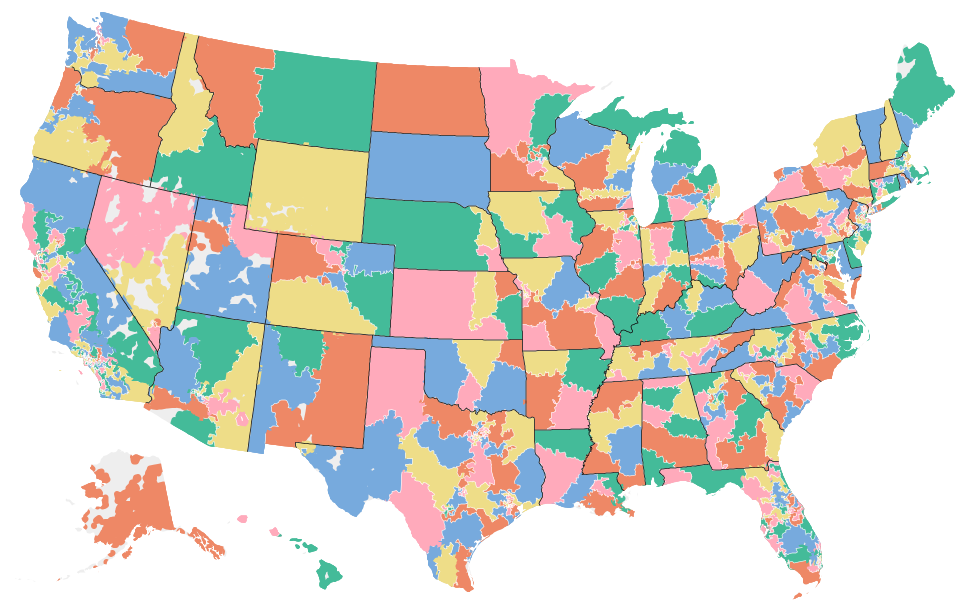
- 435House districts, in all 50 states
- 33,585ZIP code areas, split only where a state line runs through
- 0voter, party or incumbent data used
- 420 of 429multi-seat districts within ±1% of their state's target
Three simple steps
Start with ZIP codes
Everyone knows their ZIP code, and ZIP areas weren't drawn for politics. Each ZIP goes whole into one district. Only a state line can divide a ZIP, so your ZIP code tells you who represents you.
Apply one fixed rule
The same rule runs in every state, chosen before anyone looks at the results. Shortest splitline, for example, keeps dividing a state with the shortest line that splits its people in the right ratio.
Publish everything
The code, the data and the partisan outcomes are all public, so anyone can check the maps, rerun them, or argue with the results.
The why
Americans live in a ZIP code split between congressional districts. Research links split ZIP codes to people knowing and contacting their representative less. The research →
That's how far a 2-point shift in the national vote moves the House under shortest splitline. Districts follow voters instead of locking in a result. Responsiveness →
Politics-blind maps aren't neutral in outcome. On 2024 results they lean Republican, about as much as today's maps do, because of where voters live. Partisan outcomes →